Thursday, June 9, 2011

Shelly

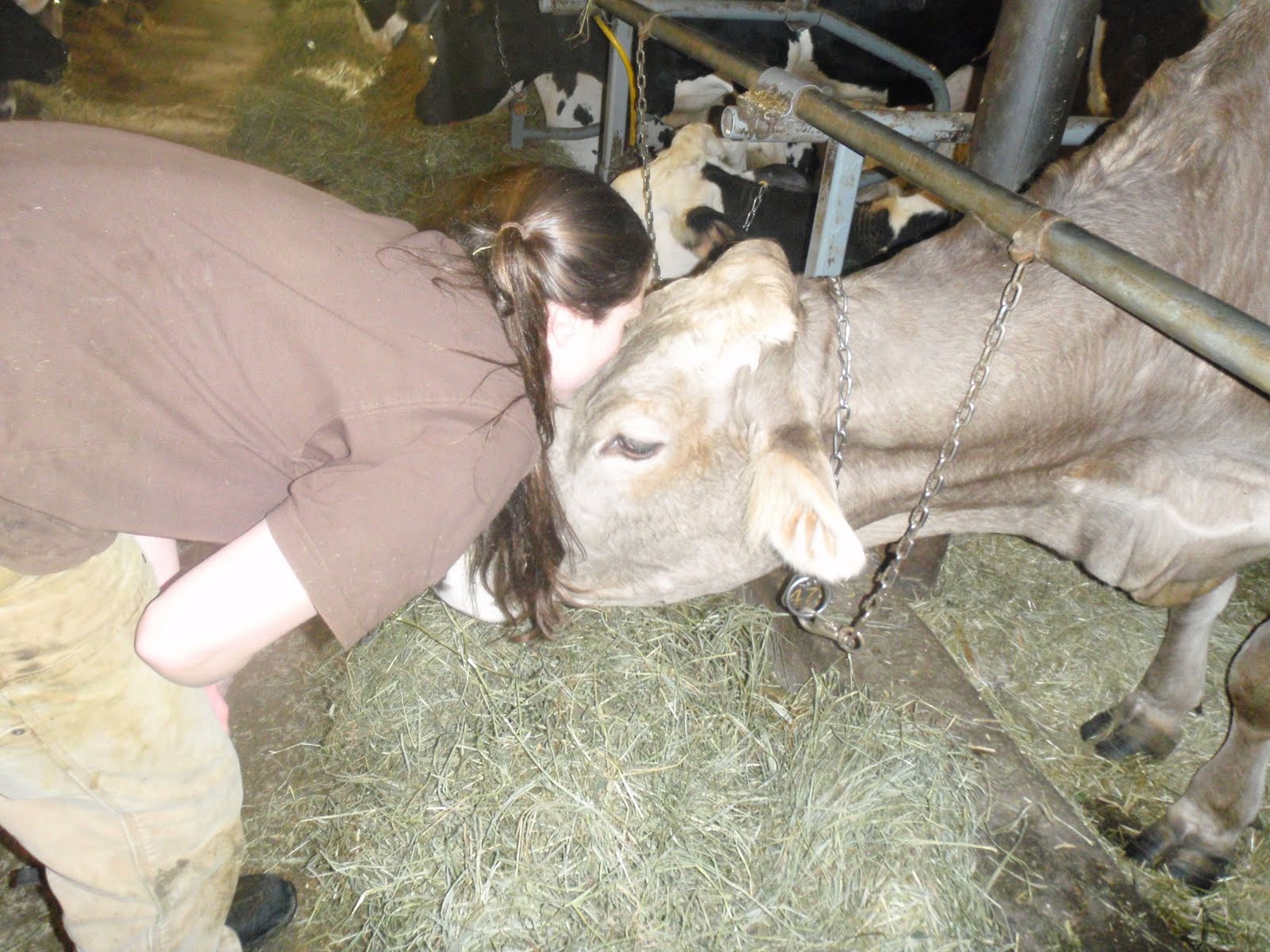
A heifer was born on my birthday so I decided to name her. Although I know many of our cows by their number, it is a little impersonal. There are many cows I love on our farm who I call by their number, 1125, 1305, 1490, 1528...  but I think it would be nice to start naming our cows. It may be a little much naming all cows on a 400 head farm, but I think its fun to name our friends :D

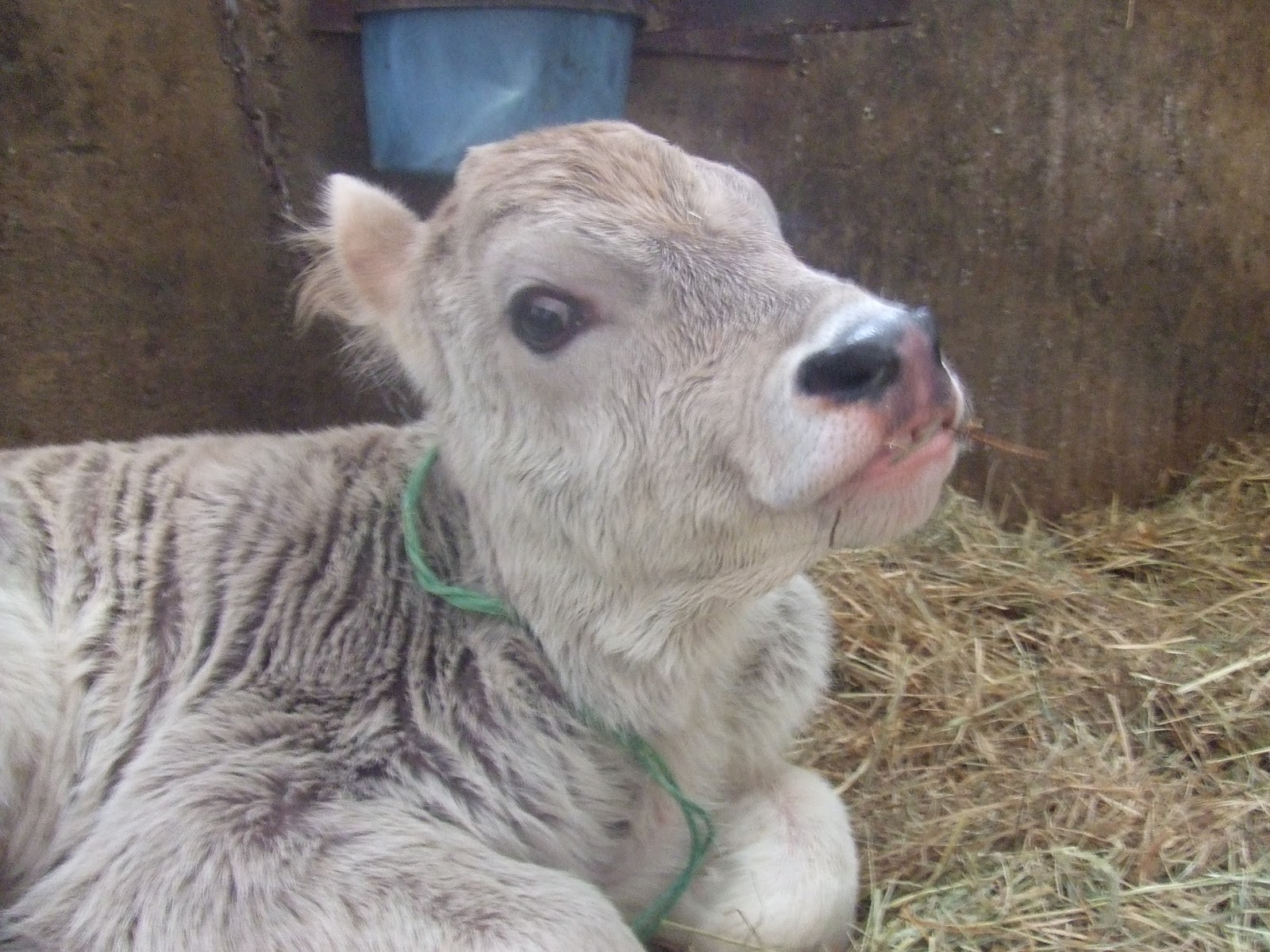
I decided to name her Shelly. She is a lovely Holstein (black and white cows see photo below) with nice markings, I think she will grow into a good milking cow. It's always fun to watch our little calves grow into cows, and I'm excited to see what this world will bring little Shelly.

One of my favorite Holsteins 1115

Sunday, May 29, 2011

Soggy Cows

Vermont has experienced one of the wettest springs ever. Not only has Lake Champlain risen 6 feet above normal levels, it has been raining, heavy, for the past month! Our farm is located near the lake, with a creek (now it seems like an ocean) running through it. The creek is so flooded, we cannot get to over 150 acres of land. The pasture for our heifers is unreachable, the poor young-ins are yearning to go out to pasture. Also, our pasture for our milkers is so wet, the poor ladies are so uninterested in eating the overgrown grass.

With all this rain, the grass is growing like crazy. We cannot get tractors onto our hayfields to cut it. Farmers all over the state usually start their first cut of hay around time time of year. Unless we have a long stretch of drying, much of our feed (grass) will go to waste.

Normally, we let our cows out to graze on grass that is about 6-8" tall. This is an ideal height, because it is easier for the cows to eat younger grass. Cows eat grass by taking their tongues and wrapping it around a clump of grass, then they pull it up to put it in their mouths. Once the grass gets beyond 8" tall, it gets annoying to the cows to eat. It pokes them in the eyes and they have a harder time actually ripping the grass out of the ground. This causes the cows to search around for shorter grass- as they do this, they trample on the grass and knock it down. The result is ruined grass that the cows will not eat and will also not grow back right without some pasture management by a tractor. We cannot get the tractors onto the fields. It is a soggy soggy mess.

Because we are an organic farm, there is a pasture requirement. All organic cows must get 30% of their dry matter intake from pasture. This requirement forces organic farmers to pasture their cows as much as possible during the entire growing season. This rule is a good thing because it requires an organic farmer to have available pasture for the amount of cows on his or her farm.

Exemptions apply, in serous weather events, we can keep our cows at the barn. This is ok to do once in a while, we just put some extra feed (which is the food we grew last season to make it through the winter when pasture isn't available) down for the cows and they can eat all day.

Because we are getting all this rain, we are so far behind in planting our field crops. We are also running out of feed from last year. So we are stuck in this inbetween while mother nature continues to fall from the sky. Because of the rain, our cows can't eat the grass that is growing, we also cant harvest that grass because the ground is so wet, we are running out of feed from last year to feed our cows. We are in an absolutely sticky situation and we really hope it dries out really soon.

So please, whoever is praying for rain, stop!

Monday, May 2, 2011

The Modern Milk Maid gets HITCHED!

I've married the man of my dreams... so its been a while since I've blogged. Please accept my apologies! I will be blogging about my cows a WHOLE LOT MORE NOW! I have quit the DRAINING 9-5 to come back to work on the Organic dairy farm full time!! Many great stories to come!!!

We built our first fence of the season today! The ladies (cows) are going to be SO HAPPY to go outside! :D

Monday, March 21, 2011

Bread and Butter Beef Stew

Last Wednesday, I did some more training at Bread and Butter Farm. I will be relief milking when one of the owners on maternity leave for a bit. She is still milking cows, however, at almost 9 months pregnant! But when the baby comes, I will be milking Mondays at Bread and Butter Farm. Their farm is a true Micro-dairy. They feed 100% grass to their extremely small Jersey heard.

On Wednesday, I was given a 4.55 lb bone in chuck roast for doing chores. This was the biggest piece of meat I have held in a while, I just started eating farm fresh meat no more than 6 months ago. But I can't say no to a beautiful piece of locally grown meat.

I decided to make a beef stew out of the meat. It was the most delicious meat dish I have made to date. Craig and I ate it for two days straight- breakfast, lunch and dinner it was that good! I also served it with 100% local homemade biscuits! YUM!

Bread and Butter Farm Beef Stew

  • Approximately 2-3 pounds local beef chuck roast cut in cubes. I started with a 4.55 lb bone in chuck roast and removed the bone and some of the fat.
  • 2 cups red wine. I used cabernet sauvignon 
  • 4 cups chicken stock. A lot of the recipes I looked up called for beef stock. But I felt that a chicken stock gave enough flavor. Plus, I can get free range organic chicken stock from my local co-op, and it was on sale.
  • 3-4 cloves of garlic chopped
  • one large yellow onion chopped
  • 8 sprigs fresh thyme tied together with cooking twine
  • 2 bay leaves
  • 4 large Yukon gold potatoes. I think red, fingerling, or russets would also make a great potato for this stew
  • 2 large carrots
  • 1 cup green peas
  • 1/2 cup extra virgin olive oil
  • 2 tbs butter
  • local all purpose flour
Heat olive oil and butter in large skillet or soup pan until hot. Add cubed beef in one layer to skillet and brown on all sides. You may have to work in batches. Put browned beef on a plate and set aside when browned.

Add wine to skillet. Stir with wooden spoon until wine is hot and scrape browned bits of beef from pan. When wine gets hot, add chicken stock and browned meat and bring that to a boil. Then turn heat down so the mixture simmers for 20 minutes, uncovered, until mixture starts to thicken.

At this point, I put the mixture in a preheated slow cooker, so I could let it cook while I fished up some errands. You could also just start with a large soup pot, and let it cook in that the whole time. I let the mixture cook for two hours on low, covered, in a slow cooker, you could do the same on your stove top.

After two hours I preheated a large skillet with a tbs of olive oil. I then added the chopped onions, garlic, and carrot and cooked until soft and browned. I then added the cooked vegetables, thyme, bay leaves and the cubed potatoes to the slow cooker, turned it to high and let cook for an additional 1-2 hours- until vegetables are nice and soft. I cooked the vegetables first in a pan because I think the cooking of the vegetables gives it more flavor. I'm sure it would come out fine if using a slow cooker to just add the raw vegetables to the stew and let it go. Add defrosted green peas before serving!

I served it in a bowl with some homemade local busicuts. IT WAS SO DELICIOUS! Also, eating meat I exchanged for labor at the farm just tastes a little better!

Enjoy!


Sunday, March 20, 2011

First day of spring!

Today is the first day of spring!!! Beautiful and sunny, but a bit on the cold side.

This is a photo of the farm yesterday while it was snowing.


Happy Spring!!!

Friday, March 18, 2011

HAPPY HEIFER DAY!

I WAS RIGHT!! Cow 501 calved yesterday afternoon- a beautiful and happy heifer :)

but, I forgot my camera. I will bring it to the barn tomorrow morning, pics to follow...


Momma